
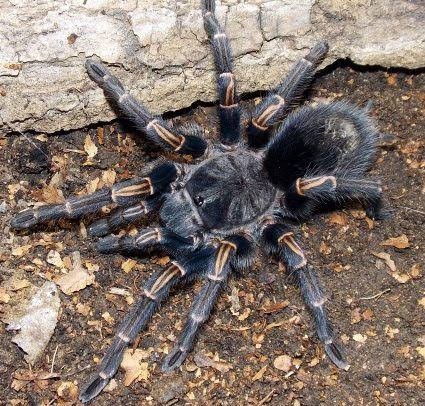
What to expect
Peru Blue Zebras come from Peru and are kept as terrestrial tarantulas. Adults reach around 12–14 cm, with moderate growth. In the UK hobby, the species is currently best described as rare.
Do not expect every Peru Blue Zebra to behave identically. Appetite, retreat use, webbing and confidence in the open can vary between individuals, so use the species' normal lifestyle as a guide and adjust to the behaviour of the individual spider.
Enclosure setup
Peru Blue Zebras are terrestrial, so the enclosure should prioritise floor space, secure footing and a low fall height. Give the spider a snug hide at ground level and enough substrate for normal digging or rearranging around the entrance.
Keep heavy decor low and stable. As Warmiru lagunas grows, increase the enclosure gradually; a small sling does not need to be placed straight into an adult setup simply because the species can eventually reach around 12–14 cm.
Temperature and room placement
A practical temperature range for Warmiru lagunas is 20–25 °C; stable room temperatures suit it. Stable room conditions are more useful than chasing a precise number every hour. Check the shelf where the enclosure actually sits, especially during very warm weather and through winter.
For Warmiru lagunas, keep the enclosure away from direct sunlight, radiators and electronics that create local hot spots. Do not attach a heat mat directly to the enclosure; if the room is genuinely too cold, warming the room is easier to control than creating one concentrated hot surface.
Moisture, water and ventilation
For Peru Blue Zebras, the moisture approach is straightforward. Use a modest moisture gradient with a water dish and good ventilation, allowing the top layer to dry. You do not need every part of the substrate to be equally wet, and persistent condensation or a stale smell usually means the enclosure is staying too damp.
Keep a clean water dish available for Warmiru lagunas once the spider is large enough to use one safely. Smaller juvenile enclosures can dry faster than adult setups, so adjust how often you add water to the actual drying rate rather than following a fixed calendar.
Feeding
Feed Peru Blue Zebras according to their size, appetite and abdomen rather than a fixed weekly schedule. Use established feeder insects that the spider can overpower without a long struggle, and remove live prey if it is ignored.
Young spiders usually eat more regularly while they are growing. Adults can go much longer between meals. If Warmiru lagunas begins refusing prey and spends more time hidden, premoult is one of the first normal explanations to consider.
Growth and moulting
Growth in Warmiru lagunas is moderate. Young Peru Blue Zebras generally moult more often than large juveniles and adults, and appetite often changes as a moult approaches.
During premoult in Warmiru lagunas, remove live prey and keep fresh water available. After a moult, leave the spider undisturbed until the new exoskeleton has hardened and the fangs have darkened before offering food again.
Temperament and safe maintenance
Individual Peru Blue Zebras vary in how they respond to disturbance, so work around the behaviour of the spider you actually keep. Use long tools when useful and have a catch cup ready for rehousing.
Handling is unnecessary for routine care. Even a normally steady Peru Blue Zebra can react quickly to vibration or a sudden movement, and keeping the spider inside a secure enclosure is safer for both keeper and animal.
Male and female lifespan
Male Warmiru lagunas are generally expected to live around 3–4 years, while females can live 10–14 years. These are broad captive ranges, not exact lifespans, and individual growth history can shift maturity earlier or later.
Female Warmiru lagunas continue moulting after maturity. A mature male eventually reaches his ultimate moult and may become more active around the enclosure while feeding less often. Keep moult dates if you want a clearer picture of age, growth and sex over time.
UK availability and naming
In the UK hobby, Peru Blue Zebras are currently classed as rare. Availability can change quickly between specialist stock lists, captive-produced batches and show weekends, so treat that label as a guide rather than a promise that a particular size or sex will always be easy to find.
Older hobby material may use the name Thrixopelma lagunas. Keep older labels in your records if they came with the animal, but use Warmiru lagunas when checking current husbandry or taxonomy.
Long-term care
Long-term care for Warmiru lagunas is mostly about consistency. Keep the enclosure secure, maintain fresh water, feed sensibly, respect the spider's retreat and make changes only when the setup stops working for the animal.
Rehouse a Peru Blue Zebra when the existing enclosure has genuinely become cramped or awkward to maintain, not simply because the spider touches the walls. Prepare the new enclosure completely before moving the spider so the transfer itself can be kept short and controlled.